When most people think of acid reflux, they imagine the sharp, burning sensation of heartburn or the sour taste of indigestion. However, there is a quieter, more deceptive version of this condition that affects millions of people without ever causing a single moment of chest pain.
This condition is known as Laryngopharyngeal Reflux, or LPR. Because it lacks the traditional burning sensations associated with GERD, it has earned the name silent reflux. Because the symptoms often mimic a common cold or seasonal allergies, many people suffer for years without realizing the actual cause is coming from their stomach.
What Exactly is Silent Reflux?
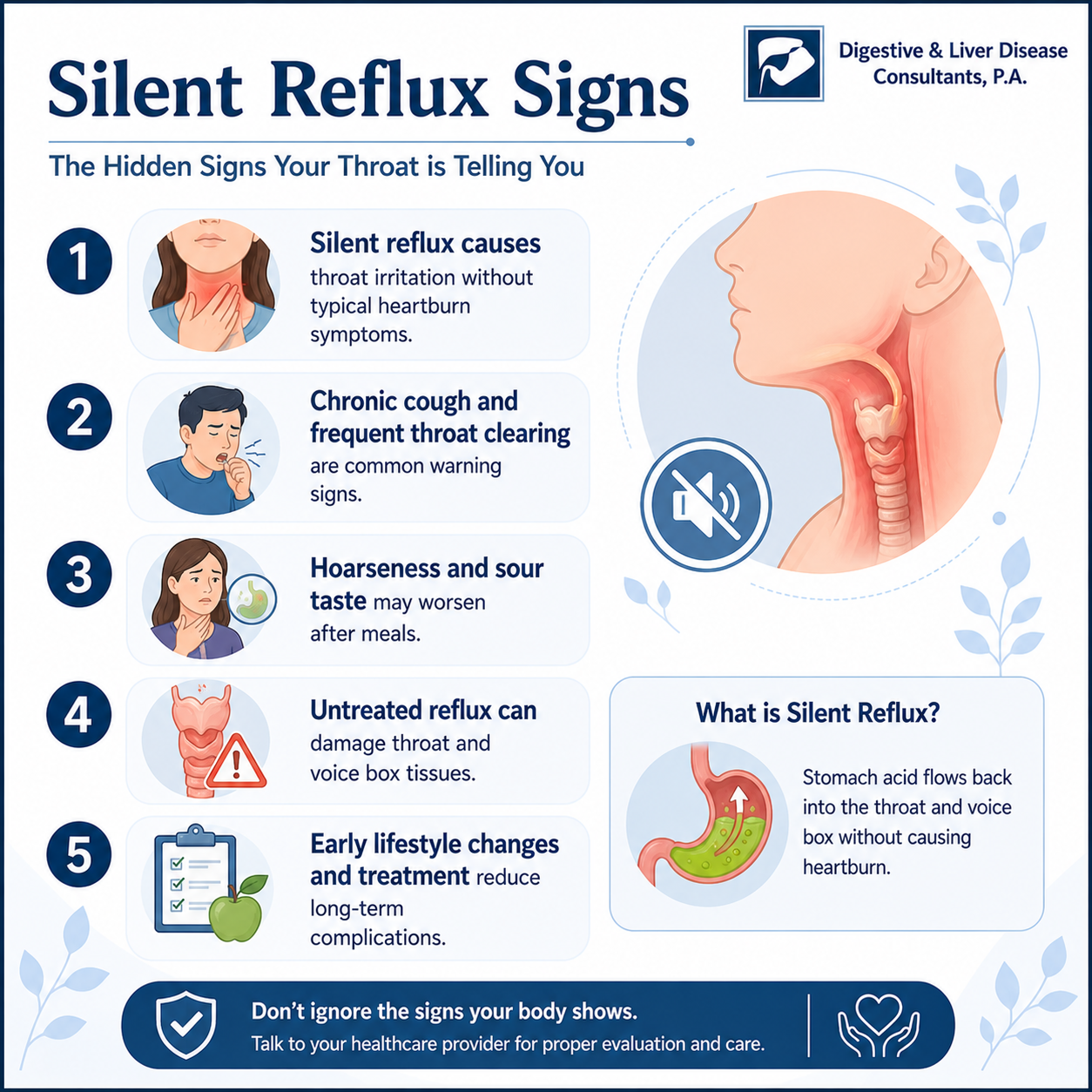
To understand silent reflux, you have to look at how the body handles stomach acid. In a typical case of GERD, stomach acid travels back up into the esophagus, causing irritation and heartburn. In silent reflux, the acid or stomach enzymes travel even further up, reaching the back of the throat, the nasal passages, and even the lungs.
The tissue in your throat is much more sensitive than the lining of your esophagus. Even a tiny amount of acid can cause significant irritation and long term damage, even if you never feel a "burn" in your chest.
Common Silent Reflux Symptoms You Should Know
Because LPR doesn't follow the usual rules of acid reflux, the signs are often respiratory or throat-based. If you find yourself constantly dealing with the following issues, it may be time to look at your digestive health.
Chronic Throat Clearing: This is one of the most common signs. You might feel like there is a constant film of mucus in your throat that you simply cannot clear away.
Persistent Hoarseness: If your voice sounds raspy or weak, especially in the morning, it could be the result of stomach acid irritating your vocal cords overnight.
A "Lump" in the Throat: Known medically as globus sensation, this is the feeling that something is stuck in your throat even when you aren't eating.
Chronic Cough: A dry, nagging cough that doesn't go away with cough medicine is a hallmark of silent reflux. This happens when acid vapors irritate the airway.
Difficulty Swallowing: You might feel a slight hesitation or a sensation of tightness when trying to swallow food or liquids.
Sore Throat and Irritation: A lingering rawness in the throat that is often mistaken for a persistent infection or allergies.
Causes of Silent Reflux
The primary cause of silent reflux is a malfunction in the sphincters, the muscular valves, at either end of the esophagus. When these valves don't close properly, acid and enzymes escape upward.
Several factors can contribute to this, including:
Dietary Habits: Consuming high amounts of caffeine, alcohol, spicy foods, or acidic fruits can trigger the production of excess acid.
Physical Pressure: Being overweight or wearing tight clothing can put pressure on the stomach, forcing acid upward.
Late Night Eating: Lying down shortly after a meal makes it much easier for acid to travel into the throat.
Hiatal Hernia: A physical condition where the upper part of the stomach pushes through the diaphragm can interfere with the natural valves of the esophagus.
Why Diagnosis is Critical?
Leaving silent reflux untreated can lead to more than just a scratchy voice. Over time, the constant presence of acid in the throat can cause scarring, narrowing of the airway, and in severe cases, it can increase the risk of certain types of cancer.
A silent reflux diagnosis usually begins with a consultation with a gastroenterologist. They may use a small camera to look at the vocal cords or perform tests to measure the pH levels in your throat over a 24 hour period. Identifying the problem early is the best way to prevent permanent tissue damage.
Managing Silent Reflux Naturally and Medically
The good news is that silent reflux is highly manageable. A combination of lifestyle shifts and medical guidance can often resolve the symptoms entirely.
Adjust Your Sleep Position: Using a wedge pillow to keep your head and chest elevated can keep acid where it belongs while you sleep.
Watch the Clock: Try to finish your last meal at least three hours before you go to bed.
Identify Triggers: Keep a food diary to see if certain items like chocolate, mint, or carbonated drinks make your throat symptoms worse.
Small Meals: Instead of three large meals, try eating smaller portions throughout the day to reduce stomach pressure.
Professional Treatment: In some cases, your doctor may recommend medications to reduce stomach acid production while your throat tissues heal.
Why Choose Digestive & Liver Disease Consultants, P.A.?
Identifying silent reflux requires a high level of expertise because the symptoms are so easily confused with other conditions. At Digestive & Liver Disease Consultants, P.A., we specialize in uncovering the root cause of these "hidden" digestive issues.
Comprehensive Diagnostic Tools
We use the most advanced diagnostic technology available to assess the health of your esophagus and throat. Our team is skilled in identifying the subtle signs of LPR that general practitioners might overlook.
A Team of Specialists
Our board certified gastroenterologists work closely with you to understand your lifestyle and symptoms. We don't just treat the cough; we treat the underlying digestive dysfunction that causes it.
Personalized Management Plans
We believe that every patient deserves a unique approach. Whether your solution involves dietary changes, medication, or a combination of both, we create a plan that fits your life and helps you find relief as quickly as possible.
Commitment to Long Term Health
Our goal is to help you breathe, speak, and eat comfortably again. We focus on preventive care to ensure that temporary irritation doesn't turn into a lifelong health challenge.
Conclusion
Silent reflux is a master of disguise, but it doesn't have to control your life. By recognizing that a chronic cough or a raspy voice might actually be a cry for help from your digestive system, you can take the first step toward healing. Proper awareness and early intervention are the keys to protecting your throat and your overall well being.
If you suspect that your throat irritation is more than just a common cold, it is time to get answers.
Schedule Your Consultation Today
Stop guessing about your symptoms and start feeling better. Contact Digestive & Liver Disease Consultants, P.A. today to schedule an evaluation. Our expert team is dedicated to providing the specialized care you need to manage silent reflux and restore your digestive health.
Call us or visit our website to book your appointment. We are here to help you find your voice again.