Summer brings longer days, outdoor activities, and a shift in our daily eating patterns. While the warm weather inspires a fresh, seasonal diet, the rising temperatures can present unique challenges for your digestive system. Increased heat often leads to dehydration, which directly impacts bowel regularity and slows down gastrointestinal motility. Additionally, standard summer indulgences like sugary ice creams, carbonated beverages, and greasy barbecue options can easily trigger acid reflux, painful bloating, and chronic indigestion.
Taking proactive care of your digestive health nutrition is essential during the warmer months. By actively focusing on cooling foods for digestion and maintaining proper fluid balance, you can support your gut microbiome foods and keep your entire gastrointestinal tract functioning optimally.
Understanding how seasonal changes affect your internal environment allows you to make informed dietary choices. Embracing a gut friendly summer diet not only mitigates uncomfortable seasonal symptoms but also strengthens your overall immune system, as the vast majority of your body's immune cells reside within the tissue lining of your colon.
Persistent bloating, acidity, or stomach pain? Consult Digestive & Liver Disease Consultants, P.A. today.
1. Ultimate Hydrating Foods for Gut Health
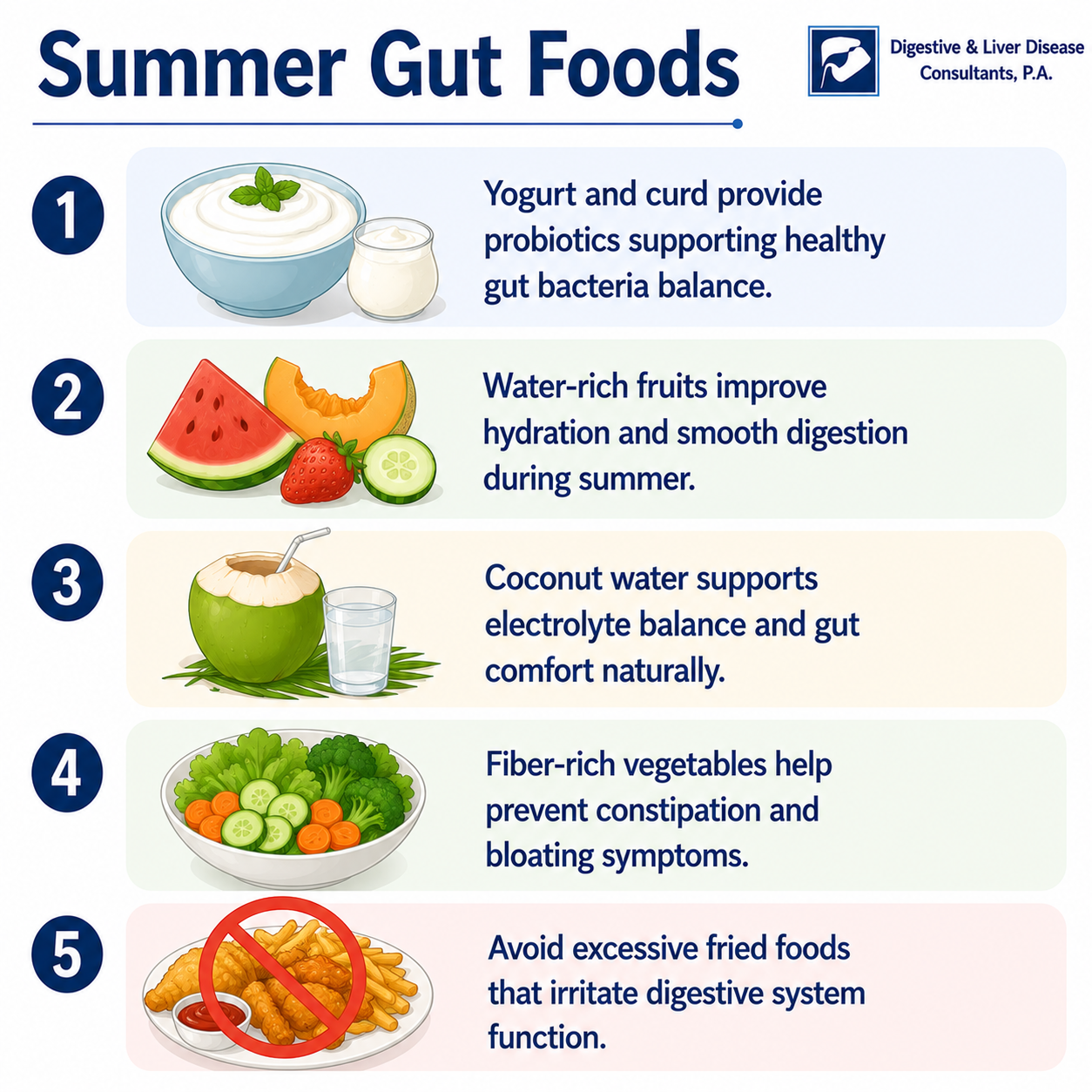
Sustaining a high level of hydration is the foundation of smooth digestion. When your body is dehydrated, the colon absorbs water from your food waste, resulting in hard stools and uncomfortable constipation. Incorporating fresh fruits for digestion that boast high water metrics keeps the digestive tract sufficiently lubricated.
Watermelon: Consisting of over ninety percent water, watermelon is an exceptional fruit for satisfying fluid needs while providing vital micronutrients. It contains a gentle amount of soluble fiber that encourages regular bowel movements without adding stress to the stomach lining.
Cucumbers: Remarkably cooling and crisp, cucumbers are packed with water and contain specialized fiber matrices that prevent abdominal distension. Eating them raw with the skin intact ensures you receive both the structural fiber and the hydrating juices required for optimal intestinal transit.
Celery: Another highly hydrating vegetable, celery provides a natural source of essential minerals and electrolytes that assist in regulating fluid balance across your cellular membranes, keeping your digestive system active.
2. Probiotic Foods Summer Essentials
Your large intestine is home to trillions of living microorganisms collectively known as the gut microbiome. Consuming live, beneficial bacteria helps crowd out harmful pathogens, reduces systemic inflammation, and assists in breaking down complex food structures.
Yogurt for Gut Health: Unsweetened, plain Greek yogurt or traditional live-culture yogurt remains one of the most effective probiotic foods summer options. The specific lactic acid-producing strains, such as Lactobacillus, work diligently to restore balance to your intestinal flora, reducing the frequency of gas and bloating. Always review product labels to ensure there are no added sugars, which can feed undesirable bacteria.
Traditional Buttermilk: Often referred to as cultured buttermilk in Western diets, this fermented dairy drink acts as a highly effective natural cooling agent for the lower stomach. It is light, packed with live cultures, and incredibly easy for a sensitive gastrointestinal system to process on a hot afternoon.
Kefir: This cultured dairy drink contains a diverse array of distinct bacterial and yeast strains, making it an incredibly potent option for anyone looking to actively rebuild their internal microbial defenses after a bout of summer sluggishness.
3. Fiber Rich Summer Foods for Motility
Dietary fiber acts as the primary fuel source for your beneficial gut microbes. When these bacteria ferment prebiotic fibers, they generate short-chain fatty acids that directly nourish the cells lining your colon walls.
Berries: Raspberries, blackberries, and strawberries are exceptional, low-fructose fruits that deliver massive amounts of fiber per serving. Because they are naturally lower in fruit sugars, they are far less likely to cause the gas and fermentation that high-fructose fruits like apples or pears sometimes induce in sensitive individuals.
Leafy Greens: Incorporating abundant servings of spinach, kale, and Swiss chard into your meals provides your body with necessary bulk and unique sugar molecules that specifically stimulate the growth of helpful organisms within the gut.
Chia Seeds: When exposed to liquids, chia seeds form a soothing, gelatinous coating. This specific structure helps soothe an irritated stomach lining while providing a concentrated dose of soluble fiber to prevent seasonal constipation.
4. Cooling Foods for Digestion and Bloating Relief
When internal discomfort arises, choosing specific herbs and ingredients can significantly reduce inflammation, relax the smooth muscles of your gastrointestinal tract, and alleviate painful pressure.
Fresh Mint: Mint leaves contain natural compounds that have an anti-spasmodic effect on the digestive tract. Incorporating mint into your water or salads helps relax tight intestinal muscles, allowing trapped gas to dissipate and immediately working as one of the best foods to reduce bloating.
Fennel Seeds: Long used as traditional, natural digestive health tips, chewing on a small spoonful of fennel seeds after a heavy meal stimulates the production of essential digestive enzymes and rapidly breaks down gas bubbles in the stomach.
Fresh Ginger: Even in small amounts, ginger accelerates gastric emptying, ensuring that food does not sit stagnant in your stomach for too long, which is a primary cause of summer acid reflux.
Practical Summer Diet for Digestion Tips
Adjusting what you eat is only one part of the equation; modifying how you consume your meals can significantly alter your digestive comfort during periods of intense external heat.
Transition to Smaller, Frequent Meals: Consuming massive, dense meals puts an immense metabolic workload on your body. Spreading your nutritional intake across four or five lighter portions reduces the strain on your stomach and liver.
Limit Fried and Greasy Food Items: Heavy fats take a significantly longer time to fully break down. High-fat items can cause the colon to contract sharply, worsening symptoms of irritable bowel syndrome and causing general lethargy.
Minimize Sugary and Carbonated Drinks: While a cold soda or an iced sweetened beverage might seem appealing, the excess refined sugars cause rapid shifts in your intestinal bacteria, often culminating in sudden bloating and diarrhea.
Why Choose Digestive & Liver Disease Consultants, P.A.?
Managing your gastrointestinal health requires a highly personalized, expert medical approach that goes beyond standard dietary advice. At Digestive & Liver Disease Consultants, P.A., our dedicated team of board-certified gastroenterologists and hepatologists has been providing comprehensive, patient-centered care for decades. We specialize in diagnosing and treating the full spectrum of gastrointestinal and hepatic disorders, from routine acid reflux and chronic bloating to complex inflammatory bowel disease and advanced liver conditions.
Our state-of-the-art facility is equipped with advanced diagnostic and therapeutic endoscopic technologies, allowing us to pinpoint issues early and deliver minimally invasive treatments for a faster, more comfortable recovery. We firmly believe in compassionate, unrushed medicine where every patient is treated with dignity, respect, and individualized attention. Our clinicians work collaboratively with specialized medical professionals to ensure that your treatment plan accounts for every aspect of your systemic health, keeping your wellness goals at the forefront of our practice.
Conclusion
Prioritizing your gut health during the summer months is a vital step toward protecting your day-to-day comfort, energy levels, and overall immune function. By consistently choosing hydrating fruits for digestion, incorporating rich probiotic items like yogurt, and opting for smaller, cooling meals, you can actively protect your gastrointestinal system from seasonal distress.
However, if you experience ongoing abdominal pain, chronic bloating, changes in bowel habits, or persistent acid reflux that lifestyle modifications fail to resolve, it is crucial to consult a medical professional rather than waiting for symptoms to escalate.
Take control of your digestive wellness today. Contact Digestive & Liver Disease Consultants, P.A. to schedule a comprehensive evaluation with our expert gastroenterology specialists and receive a personalized care plan designed to keep your health on track all year long.