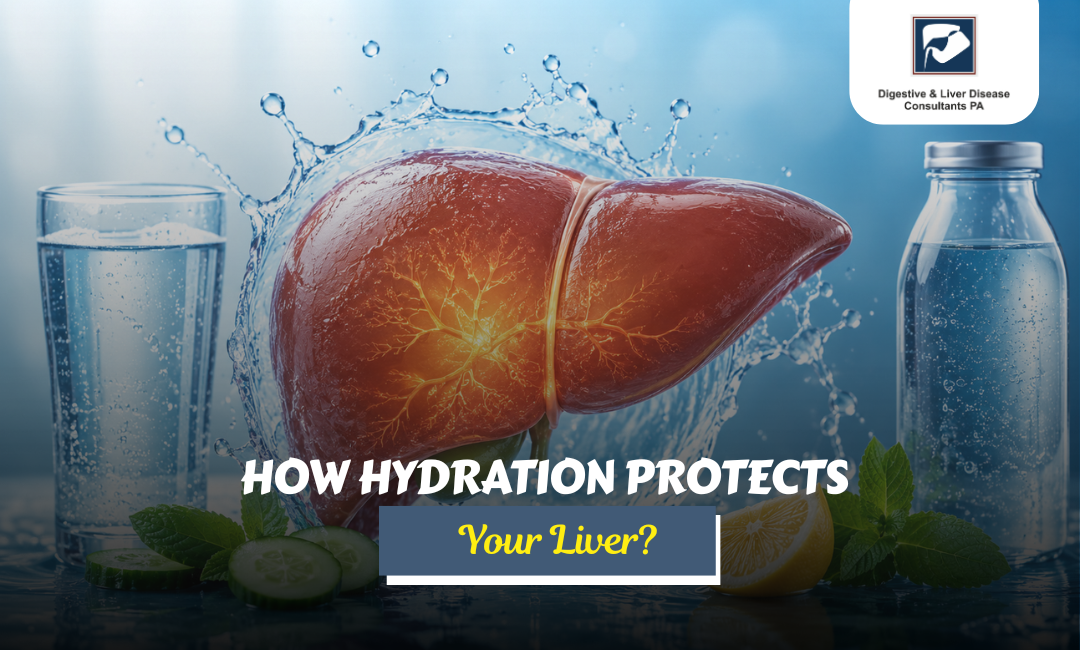
Water is often seen as something basic, but when it comes to liver health, it plays a much deeper role than most people realize. Your liver works around the clock to filter toxins, support digestion, balance metabolism, and store nutrients. For all of this to function smoothly, hydration is not optional. It is essential.
When the body is properly hydrated, the liver can do its job efficiently. When water intake drops, everything slows down, including detox processes, fat metabolism, and toxin removal.
Why hydration matters for liver health?
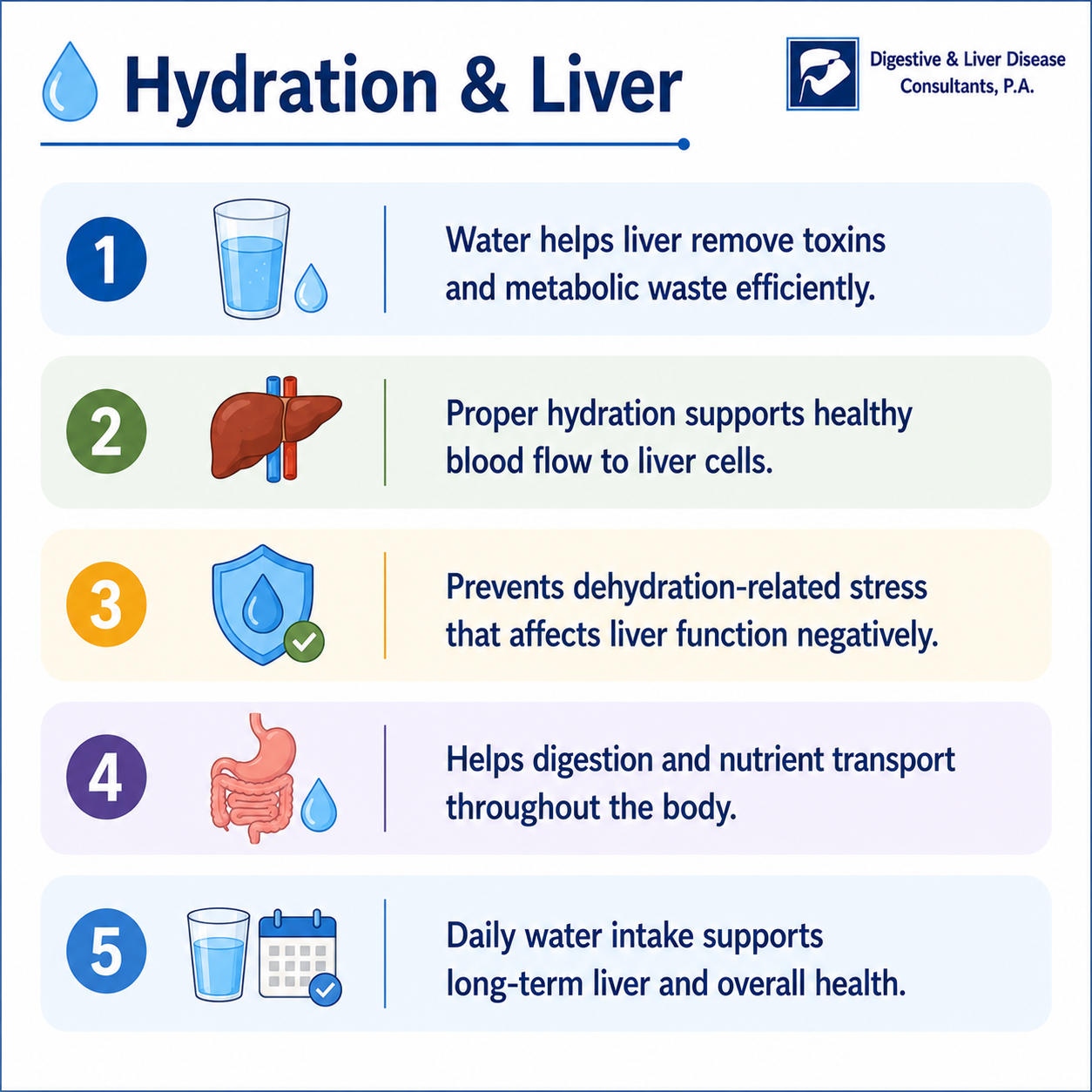
The liver depends on water for almost every metabolic process. From breaking down nutrients to flushing out waste products, water is the medium that keeps everything moving.
When you drink enough water, it supports bile production. Bile is crucial for digesting fats and removing waste from the liver. Without adequate hydration, bile becomes thicker, making digestion and toxin elimination less efficient.
This is why water for liver function is not just helpful, it is foundational.
Consult our GI experts at Digestive & Liver Disease Consultants, P. A. for accurate diagnosis, personalized treatment, and long term liver care support.
How water supports liver function?
Here is what proper hydration does inside your body to support liver health:
- Helps flush toxins through urine and bile
- Supports enzyme activity needed for detox processes
- Maintains healthy blood flow to the liver
- Assists in breaking down nutrients from food
- Supports steady metabolism and energy production
- Helps regulate body temperature and cellular function
When people talk about liver cleansing naturally, hydration is one of the simplest and most effective tools available. The body already has its own detox system, and water helps it function at full capacity.
Dehydration and liver damage connection
Chronic low water intake can slowly affect liver performance. Dehydration forces the liver to work harder to concentrate toxins for elimination. Over time, this added stress can contribute to inflammation and reduced efficiency.
Dehydration and liver damage are linked in several indirect ways:
- Thickened bile can slow fat digestion
- Reduced toxin removal liver hydration efficiency
- Increased strain on kidneys and liver hydration balance
- Higher risk of metabolic imbalance
- Fatigue due to slower nutrient processing
Even mild dehydration, if consistent, can affect metabolic health and water intake balance in the body.
Fatty liver and hydration
Fatty liver disease has become increasingly common, and lifestyle factors play a major role in its development. While hydration alone cannot reverse fatty liver, it is an important supporting factor.
Here is how fatty liver and hydration are connected:
- Water supports fat metabolism in liver cells
- Proper hydration helps reduce toxin buildup that worsens inflammation
- It improves digestion, reducing fat overload on the liver
- It supports better insulin response and metabolic stability
Along with diet and physical activity, maintaining good hydration is one of the most practical liver health tips for people managing or preventing fatty liver conditions.
Water and metabolic health connection
Your liver is deeply involved in metabolism. It helps regulate blood sugar, process fats, and convert nutrients into usable energy. Without enough water, these processes become less efficient.
Metabolic health and water intake are closely linked because:
- Water helps transport nutrients into cells
- It supports enzymatic reactions involved in energy production
- It improves kidney and liver hydration balance for waste removal
- It helps maintain stable digestion and absorption patterns
If your hydration is poor, the liver ends up compensating, which can lead to long term fatigue and metabolic imbalance.
Practical liver health tips through hydration
Small daily habits can make a big difference in supporting your liver. Here are simple and practical steps:
- Drink water consistently throughout the day instead of large amounts at once
- Start your morning with a glass of water to activate digestion
- Include water rich foods like cucumber, watermelon, and oranges
- Reduce excess caffeine and sugary drinks that contribute to dehydration
- Increase water intake during hot weather or physical activity
- Monitor urine color as a simple hydration check
- Pair hydration with balanced meals for better nutrient absorption
These habits support drinking water benefits liver function and overall wellness.
Why choose Digestive & Liver Disease Consultants, P.A.?
When it comes to liver health, expert guidance matters. Self care and hydration are important, but underlying liver conditions often need medical evaluation and structured treatment.
Digestive & Liver Disease Consultants, P.A. focuses on comprehensive digestive and liver care with a patient centered approach. The team understands that liver health is not influenced by a single factor. It is shaped by lifestyle, metabolism, diet, hydration, and medical conditions working together.
Here is what makes their approach valuable:
- Specialized expertise in liver and digestive disorders
- Focus on early detection and accurate diagnosis
- Personalized treatment plans based on individual health needs
- Guidance that combines medical care with lifestyle correction
- Support for conditions like fatty liver, hepatitis, and metabolic liver disease
- Emphasis on long term liver function improvement rather than short term relief
Patients benefit from care that looks at the complete picture, not just symptoms. This is especially important for conditions influenced by hydration, diet, and metabolic health.
Conclusion
Hydration plays a direct and indirect role in keeping your liver healthy. From supporting toxin removal and bile production to improving metabolism and fat processing, water is essential for smooth liver function.
Consistent hydration supports liver cleansing naturally, reduces strain on detox pathways, and helps maintain better energy levels throughout the day. On the other hand, dehydration and liver damage risks increase when water intake is ignored over time.
Simple habits like drinking enough water daily, choosing hydrating foods, and maintaining balance during hot weather can significantly improve liver performance.
If you are experiencing symptoms like persistent fatigue, digestive discomfort, or signs of fatty liver, it is important not to ignore them. Early evaluation can make a major difference in long term liver health.
Consult our GI experts at Digestive & Liver Disease Consultants, P. A. for accurate diagnosis, personalized treatment, and long term liver care support.